How to look after artificial grass in winter
Winter is when an artificial lawn earns its keep in Wigan. While a real lawn thins, gets muddy and stays soggy for weeks after rain, artificial grass stays green, even and usable. It still needs a little care through the colder months, though — not much, and nothing complicated, but the small jobs done in winter are what keep it looking its best into spring.
Here is what we tell our own customers, and what we do on the lawns we have installed across Wigan, Standish and the North West.
Leaves first — clear them regularly
Fallen leaves are the main winter job. Left sitting on the lawn for weeks, they trap moisture underneath, stain the pile and give moss and weeds a damp place to start. They also hide the lawn itself, which defeats the point of having one that stays green all year.
Clear them every week or two through autumn and into winter, more often if you have large trees nearby. A leaf blower on a low setting, a plastic rake, or a stiff brush all work well. Avoid a metal rake with sharp tines — it can catch and pull at the fibres. A quick brush afterwards lifts the pile back up and keeps the lawn looking fresh.
If leaves have been sitting for a while, lift them, brush the area, and give it a rinse with the hose. That is usually enough.
Rain and drainage — let it do its job
Artificial grass is designed to drain through its backing, so rain should pass through rather than sit on the surface. In a normal Wigan winter, that means the lawn stays usable after rain instead of turning into a mud patch — one of the main reasons families with children and dogs ask us about it, as we covered in our guide to artificial grass vs real grass.
If water is pooling in one spot and not draining away, do not ignore it. It usually means something is sitting on the surface — a mat of leaves, a build-up of dirt, or something blocking the drainage — rather than a problem with the grass itself. Clear the surface and brush the pile, and the water should drain again. If it keeps pooling in the same place after that, it is worth having us look at it: on a well-installed lawn, laid on a proper compacted base with drainage falls built in, standing water is not normal. That specification is one of the things to check in a quote, as we set out in our guide on what to ask before you accept a quote.
Do not try to force drainage by pouring chemicals or solvents onto the lawn. Water, a brush and a hose are all it needs.
Frost and ice — leave it alone until it thaws
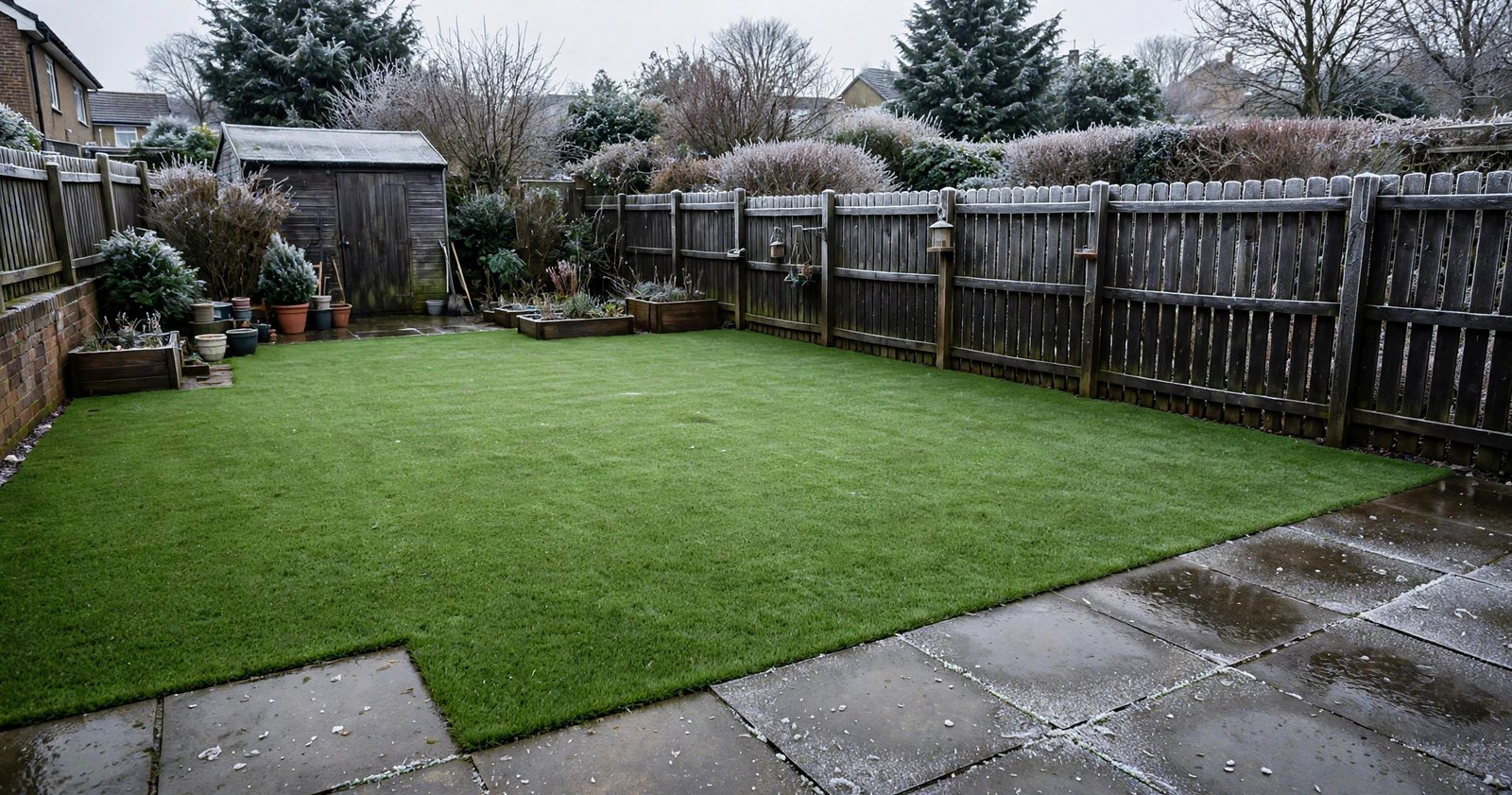
On a frosty morning, artificial grass can feel stiff and look pale with frost. That is normal, and it is not damage. The fibres will soften again as the temperature rises.
The one rule for frost is simple: wait for it to thaw before walking on it heavily, brushing it, or letting children and dogs play hard on it. Frozen fibres are brittle, and heavy use while they are frozen is the easiest way to snap them. Once the frost has lifted, the lawn is back to normal and can be used as usual.
Do not pour hot or boiling water on a frozen lawn to thaw it, and do not use a metal shovel or a sharp-edged tool to clear ice or snow. If snow has settled, let it melt naturally, or sweep it off gently with a soft brush or a plastic snow shovel once it has softened. A light covering of snow does the lawn no harm.
Mud, pets and everyday mess
Winter is also the season for muddy paws and wet feet — except, with artificial grass, there should be far less mud than a real lawn would produce. The surface drains, so it does not turn into a mud patch, and there is no mud to trail back into the house.
For pet mess, pick up solids as usual and rinse the spot with water. For urine, a rinse with water is enough in most cases; a diluted, pet-safe disinfectant made for artificial grass can be used occasionally if there is a smell, following the product's own instructions. Do not use bleach or harsh solvents — they can damage the fibres and the backing.
For general dirt and dust, a rinse with the hose every few weeks through winter is enough. There is no feeding, weeding or mowing, and no bare patches to repair.
What not to do in winter
Most winter damage to artificial grass comes from trying too hard, not too little:
- Do not use a metal rake, metal shovel or sharp tools on the surface.
- Do not pour hot water, bleach or strong chemicals on the lawn.
- Do not brush or play heavily on a frozen lawn — wait for the thaw.
- Do not leave heavy objects, such as planters or garden furniture, sitting in the same spot all winter without moving them occasionally. They flatten the pile and trap moisture underneath.
- Do not light fires, barbecues or fireworks on the lawn. Heat and embers will melt the fibres.
A brush every now and then, leaves cleared, and a rinse when it needs it — that is most of the maintenance there is, in winter as in summer.
A quick winter checklist
- Clear leaves every week or two, and brush the pile back up afterwards.
- Rinse with the hose after a muddy spell or pet use.
- Let frost thaw before heavy use, and never use hot water or a metal shovel on ice.
- Move planters and furniture occasionally so the pile does not flatten in one spot.
- If water keeps pooling in the same place, or the lawn looks flat and tired despite brushing, ask us to take a look — it is usually a simple fix, and it is better caught in winter than left until spring.
When to ask for help
If your lawn was installed by us and something does not look right — standing water, a seam lifting, an edge coming loose, or a patch that stays flat no matter how much you brush it — get in touch and we will come and look. Those are installation issues, not winter wear, and they are worth fixing properly.
And if you are thinking about artificial grass and wondering how it copes with a Wigan winter, the honest answer is that winter is when it shows its value most: green in January as in June, no mud, and no weekends lost to mowing in the rain.
We install artificial lawns across Wigan, Standish and the North West, as well as porcelain paving, resin bound driveways and bespoke fencing. Read the full guide on our artificial grass cost page.
Find out what your garden would cost
Rough size and a couple of photos is all we need to get started. Call 07967 293173, email everlastinglawns@icloud.com, or get a free quote — free survey, fixed written price, no obligation. Our office is 85 School Lane, Standish, Wigan WN6 0TE.