Soggy garden? Drainage, lawns and driveways in Wigan
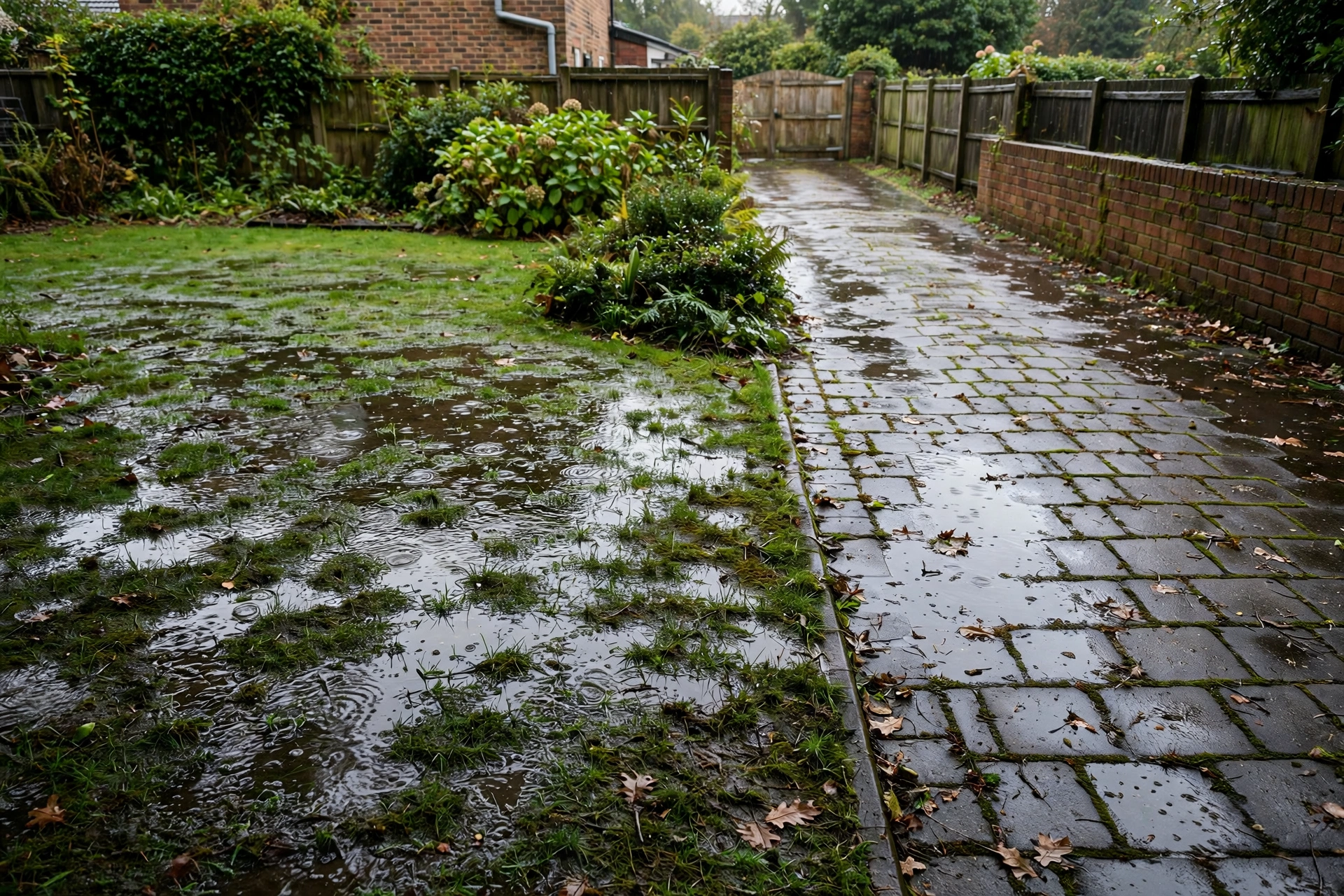
If your garden stays wet long after the rain has stopped, you are not alone — it is one of the commonest problems in Wigan gardens. Water sits on the lawn, the ground squelches underfoot, and in winter the garden becomes a place to avoid rather than a place to use. The good news is that a soggy garden is usually a drainage problem, and drainage problems can be fixed — but only if the cause is found first.
Here is how to tell what is wrong, and what to ask before any work starts.
Why Wigan gardens get soggy
Wigan gets plenty of rain, and much of the ground here holds water rather than letting it drain away. Heavy, clay-like soil drains slowly, and after a wet spell it can stay saturated for days. Add a garden that slopes towards the house, or a lawn that sits lower than the paving around it, and water has nowhere to go except to sit on the surface.
Compaction makes it worse. A lawn that has been walked on for years, or a garden that has had heavy work done on it, can become so compacted that water cannot get through the top layer at all. It runs off, or it pools — either way, the grass suffers, and the garden stays wet.
The first step is to work out whether the problem is the surface, or what is underneath it. A lawn that is wet in one low corner after rain is a different problem from a whole garden that never dries out. A driveway that floods where it meets the pavement is a different problem from a patio that holds water against the house wall. The fix depends on the cause, and a fix for the wrong cause will not work.
The lawn: what is underneath matters most
A lawn that holds water is often a lawn with a poor base. Real grass needs soil that drains, and artificial grass needs a base that drains — in both cases, the work you cannot see decides whether the surface stays dry.
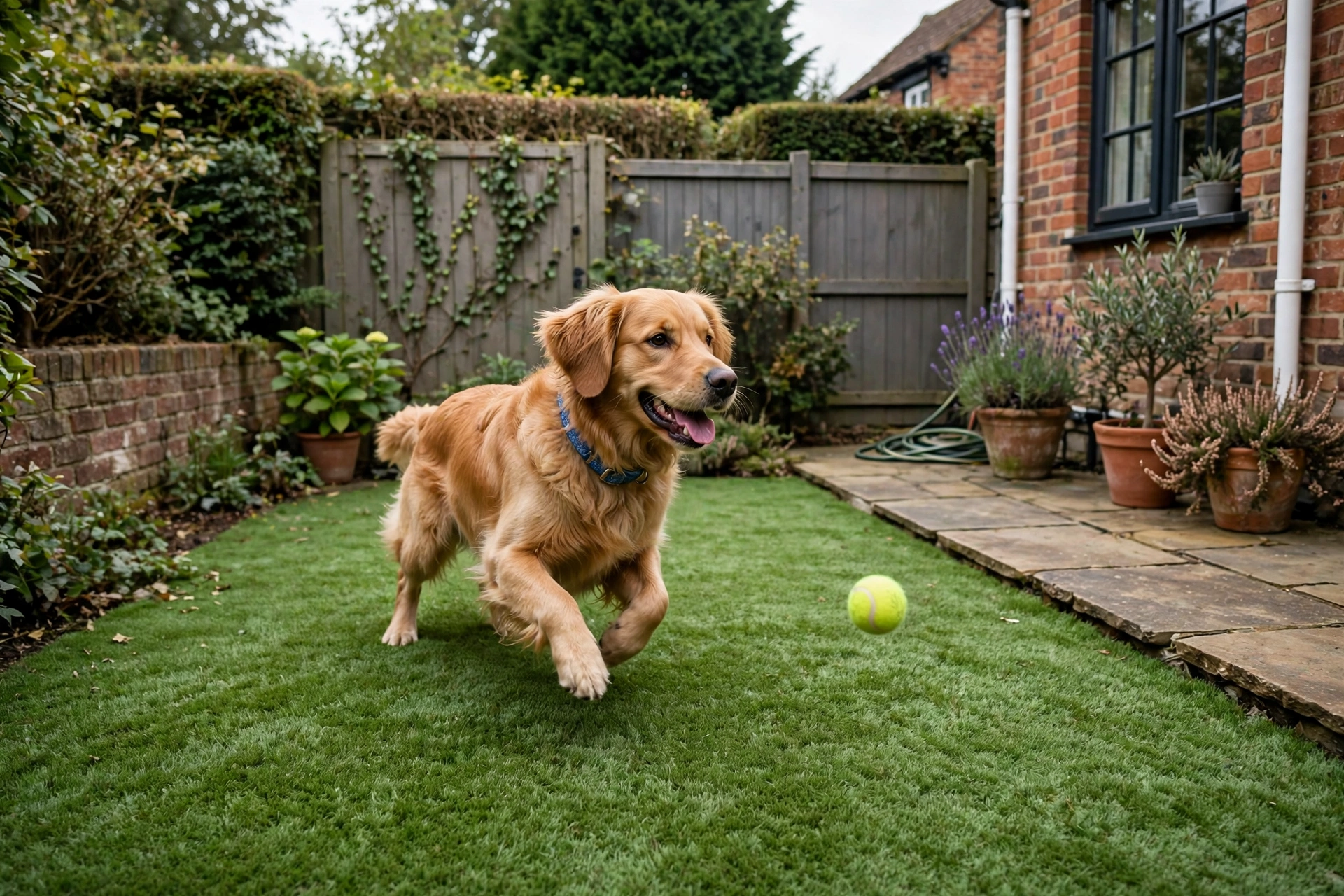
For artificial grass, the base is everything. The turf itself lets water through, but if it is laid on compacted soil, or on a base with no fall to carry water away, the water will sit under the turf and come back up. A properly prepared base — a sub-base that drains, laid with a slight fall away from the house — is what keeps an artificial lawn usable after rain. That is the same point we made in our guide to how long artificial grass lasts: the hidden work underneath decides how long the visible work lasts, and a lawn laid on a poor base will not last, however good the turf is.
For a real lawn, the signs are similar: water that sits for days, grass that thins and turns to mud in the wettest spots, and ground that feels soft and spongy underfoot. Aerating — spiking the lawn so air and water can get into the soil — can help a compacted lawn, and top-dressing with a free-draining material can help over time. But if the whole garden is low-lying and the soil holds water, aerating alone will not fix it. That is a job for proper drainage work, not for a quick treatment.
One thing not to do: do not just lay a new lawn, real or artificial, over a soggy one. A new surface over a wet, compacted base will be wet again within weeks. The base has to be dealt with first.
Driveways: permeable surfaces and where the water goes
A driveway is a large, hard surface, and in a wet climate it has to deal with a lot of water. The question is not whether water will fall on it, but where it will go.
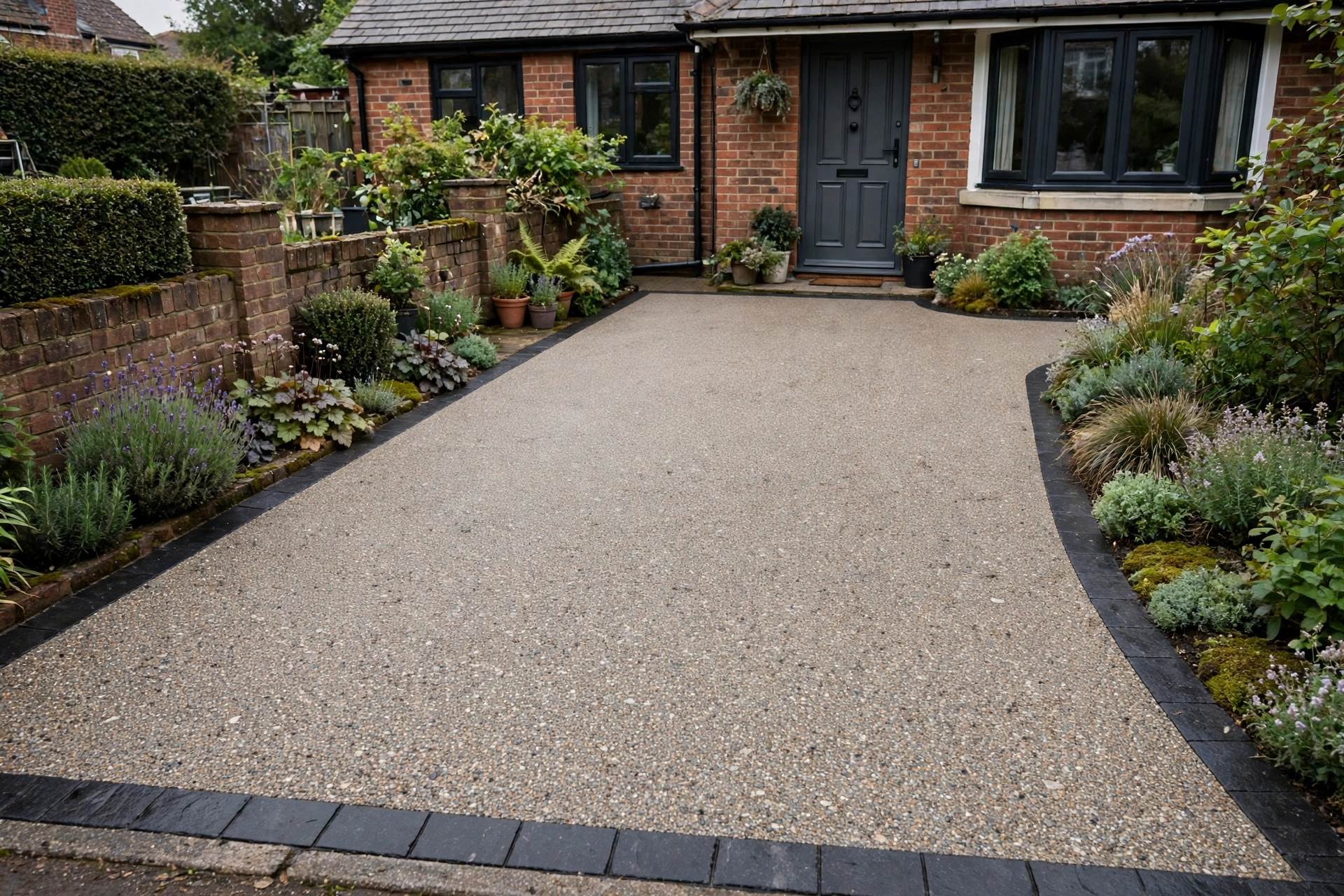
A resin bound driveway is permeable — water drains through the surface, rather than running off it — provided it is laid on the right base, with the right falls. That is one of the reasons resin compares well with other surfaces, as we set out in our comparison of resin driveway vs block paving vs tarmac. But permeable only works if the base underneath is permeable too, and if the water has somewhere to go once it has drained through. A resin surface laid on a solid, non-draining base will hold water just as surely as any other surface.
Block paving and tarmac deal with water differently: they shed it, so the falls and the drainage at the edges matter even more. A driveway that slopes towards the house, or towards a pavement with no drain, will send water exactly where you do not want it. Before any driveway is laid, ask how the water will drain away from the house, and where it will go. The surface you see is only as good as the drainage underneath it — the same advice we gave when choosing a resin driveway colour and finish, where the base and the falls matter as much as the blend.
And if your driveway already floods, do not assume a new surface alone will fix it. A new surface over a base that does not drain, or with falls that send water towards the house, will flood in the same place. The drainage has to be part of the job, not an afterthought.
Paving and patios: the same rule, on a smaller scale
Patios have the same problem, on a smaller scale. A patio that holds water in puddles, or that sends water towards the house wall, is a patio with a drainage problem — usually in the falls, or in the base, or in both.
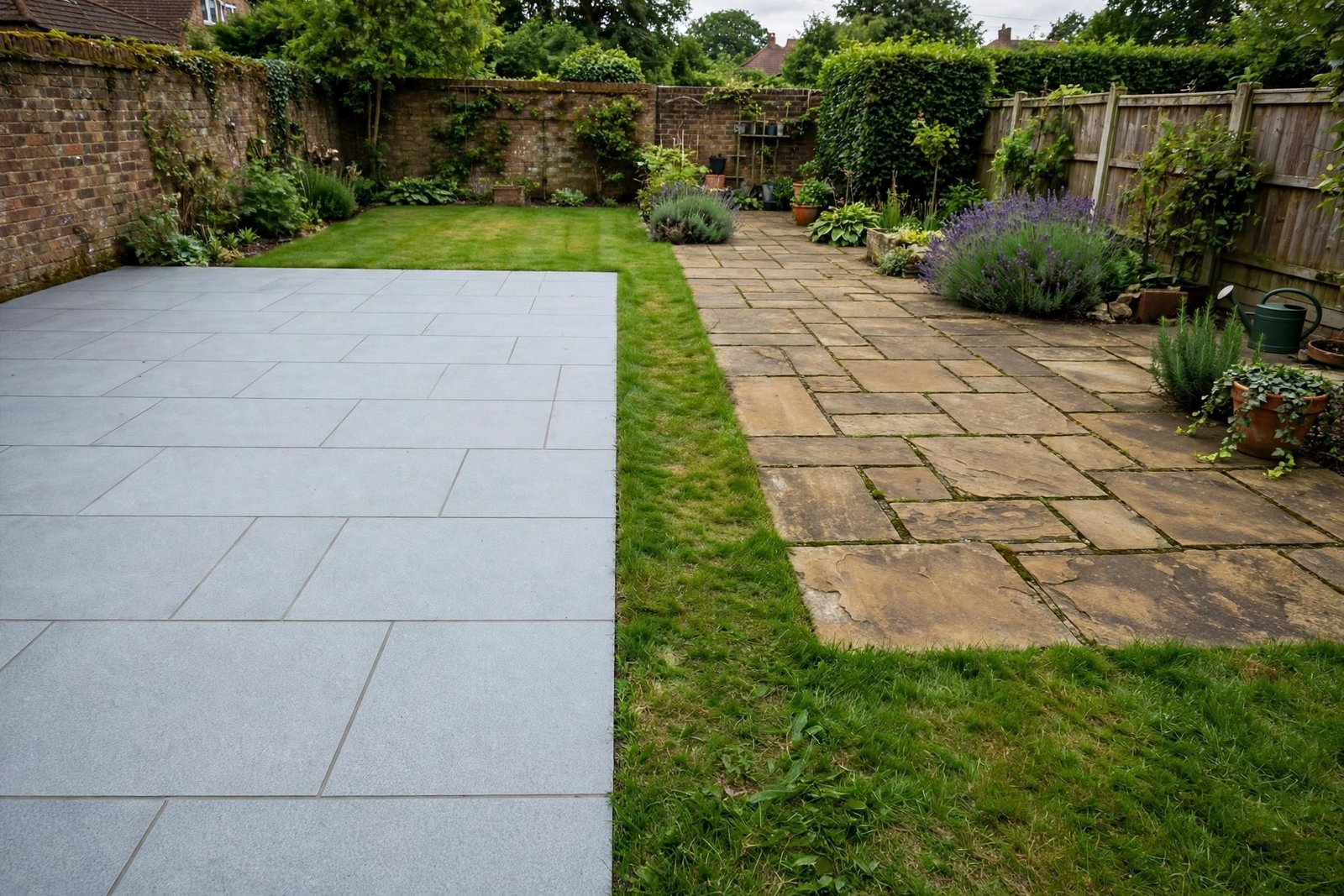
When a patio is laid, the slabs should fall gently away from the house, so water runs off and away, not towards the wall. The joints should let water through where they are meant to, and the base should be prepared so water does not sit underneath the slabs. That is the same point we made in our comparison of porcelain paving vs natural stone: the surface you walk on is only as good as the base underneath it, and a patio laid on a properly prepared sub-base, with the right falls, will last far better than the same slabs laid on a poor base.
If your patio already holds water, look first at where the water sits. If it sits against the house, the falls are wrong, and that is worth fixing before it causes damp inside. If it sits in one low spot, the base may have settled there. Either way, it is a drainage question, not a cleaning question.
What a proper survey should check
Before any work starts on a soggy garden, a proper visit should check these things:
- Where the water sits, and after how much rain — one corner, or the whole garden?
- Which way the garden slopes, and whether water runs towards the house or away from it.
- What the soil is like underneath — does it drain, or does it hold water?
- Whether the lawn, the paving and the driveway are all sending water to the same place.
- Where the water can go — a drain, a soakaway, or a lower part of the garden — and whether that route is clear.
That is what a site survey is for. We do not give a figure over the phone for drainage work, because the cost depends on the size of the garden, the ground underneath it, and what needs to be done to make the water drain properly — and a figure given without a visit would be a guess. What we do is visit, look at the garden properly, and give a free fixed written quote after a site survey, so you know what you are agreeing to before any work starts.
When you compare quotes, check that you are comparing the same thing. A quote should say how the base will be prepared, how the falls will run, and where the water will drain to. A cheaper quote that leaves out the drainage work is not cheaper — it is a different job, and it will be wet again.
The honest answer
A soggy garden is not a reason to give up on the garden. It is a reason to find out where the water is coming from and where it should go, and to fix the base and the drainage before laying anything new on top. A lawn, a driveway and a patio that are all laid with drainage in mind will stay usable through a Wigan winter — and a garden that dries out after rain is a garden you can actually use.
If your garden stays wet long after the rain has stopped, the best next step is a visit. We visit, look at the garden properly, and give you a written fixed quote free of charge — and we will tell you honestly whether the fix is a small one, or whether the base and the drainage need proper work first. Find us at everlastinglawns.co.uk.