Front garden ideas: grass, paving and fencing together
The front garden is the first thing anyone sees of a house — visitors, neighbours, and anyone looking at the house from the street. It is also, for most houses, the part of the garden that gets the least attention. The back garden gets the furniture, the barbecue and the time. The front garden gets whatever is left.
That is a shame, because a front garden does not need to be large, or complicated, to look good. What it needs is for its parts to work together: the grass, the paving and the fencing, chosen and laid as one garden, not as three separate jobs done at different times by different people. When they work together, a small front garden can look tidy, welcoming and cared for all year round — and it can be far easier to look after than a front garden that has grown up piecemeal.
Here are some combinations that work, and what to think about before you choose one.
Start with how the front garden is used
Before choosing anything, it helps to be honest about how the front garden is actually used, because that decides what it needs to be.
Is it mostly for looks — a garden to walk past and enjoy, with a path to the front door? Is it also a parking space, with a car driving over part of it every day? Is there a bin store, a place for the bins on collection day, or a path that gets used in all weathers? Does the garden get sun, or is it shaded by the house for most of the day? And how much time do you honestly want to spend looking after it?
A front garden that is a car park needs a different surface from a front garden that is only ever walked on. A shaded front garden needs a different approach from a sunny one. And a garden that nobody has time to look after needs surfaces that stay tidy with little work — which is why so many of the combinations below use artificial grass and paving together, rather than a lawn that needs mowing and a border that needs weeding.
Get the use right first, and the choices that follow become much easier.
Artificial grass at the front: tidy all year, with no mowing
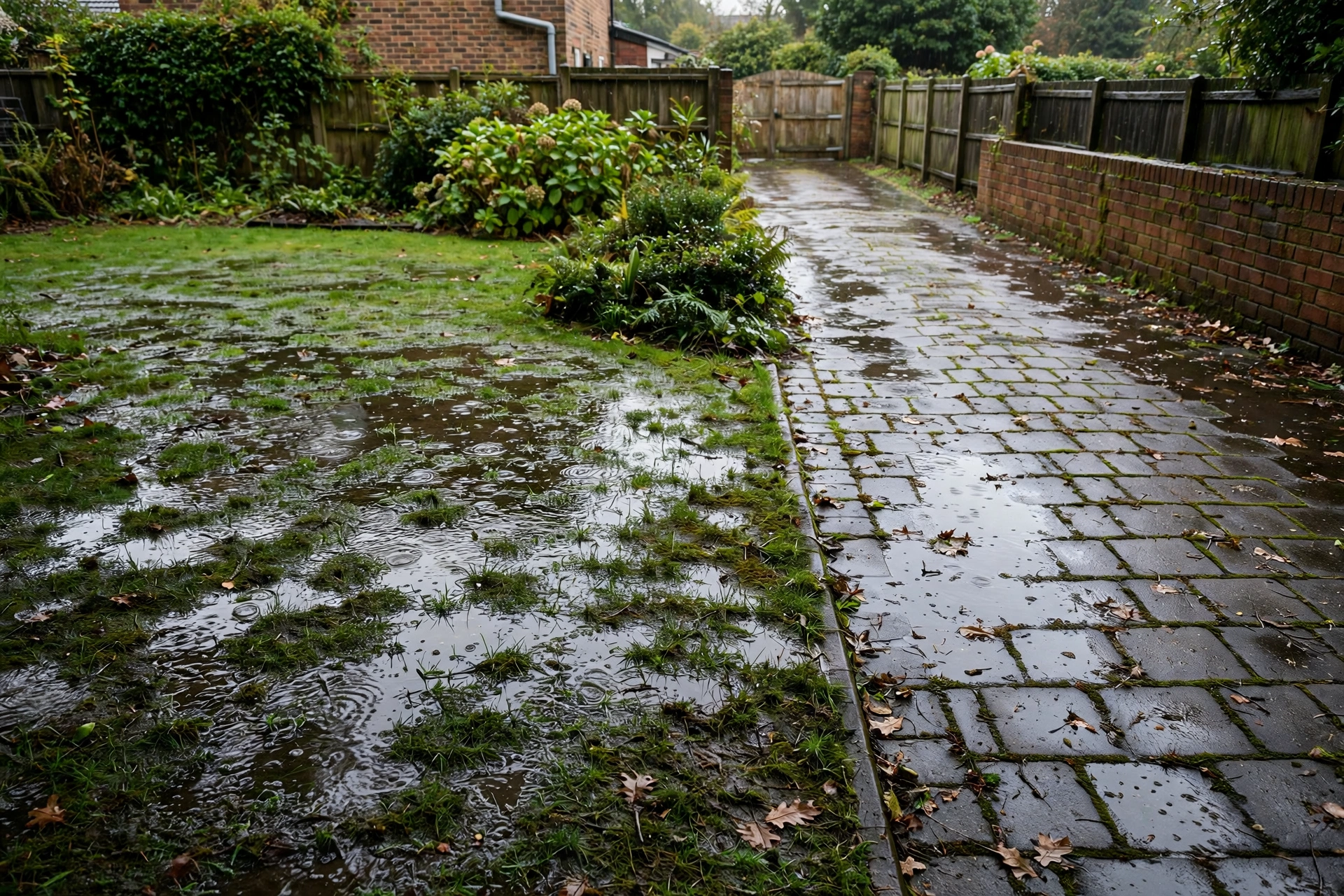
A front garden is often the worst place for a real lawn. It is usually small, often shaded by the house, and it gets walked on in the same place every day — from the gate to the front door. The result, in many houses, is a patch of grass that is thin in the middle, muddy in winter, and never quite looks like a lawn.
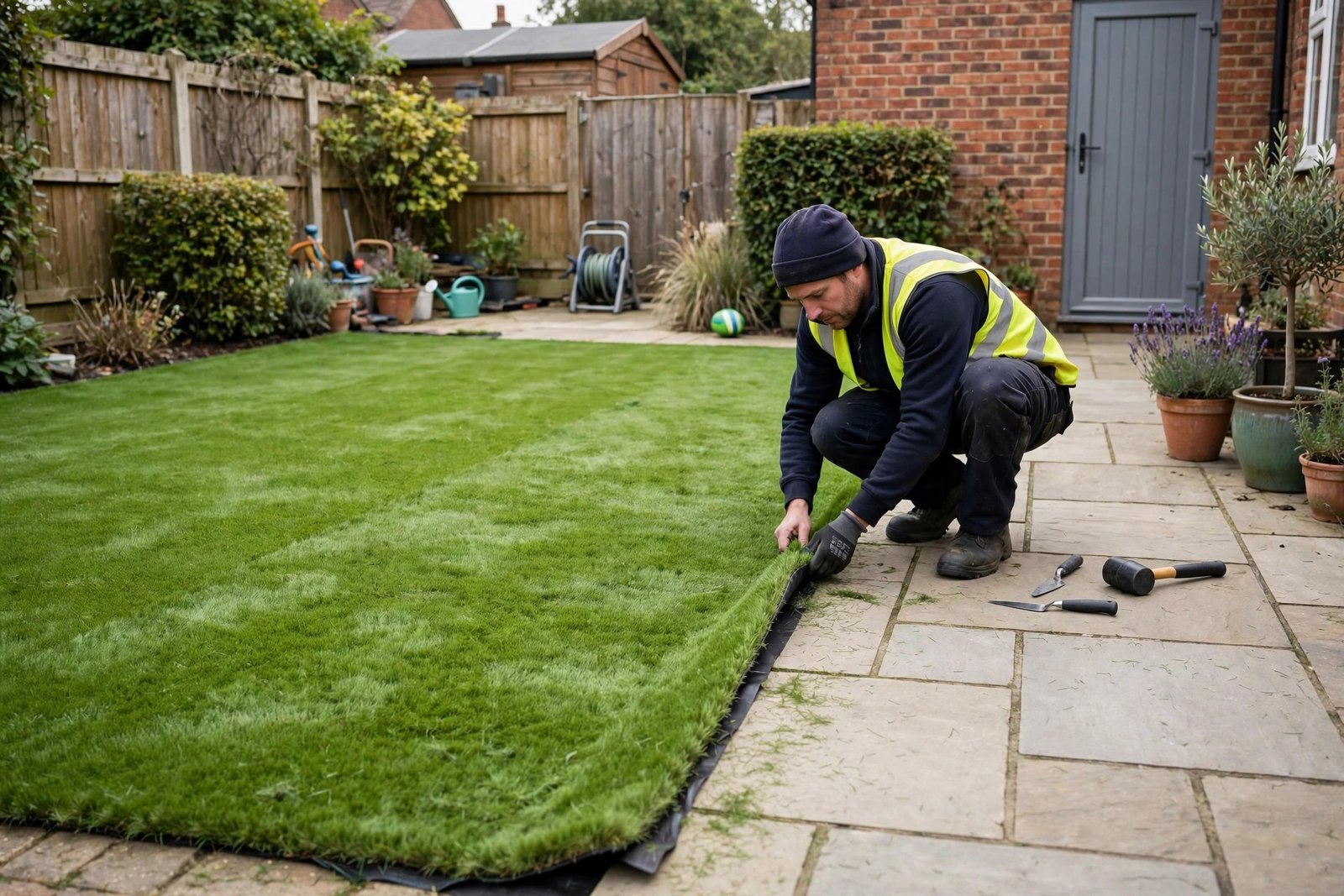
Artificial grass suits a front garden for the same reasons it suits a back garden, and one more: nobody sees a front garden mown and watered every week, because nobody has time for it. A front lawn that stays green and tidy without mowing, watering or feeding is a front lawn that looks cared for in January as well as in July — which is the point we made in our guide to how long artificia l grass lasts: the value is in how it looks over time, not just on the day it is laid.
There are a few things that matter more at the front than at the back. The edges matter, because they are what people see from the street — a lawn that meets the paving, the fence and the path neatly looks finished, and a lawn with ragged edges looks unfinished, however good the turf is. The levels matter too, because a front garden that holds water will be muddy at the gate, and the base underneath is what decides whether it drains — the same point we made in our guide to a soggy garden. And if there is a dog, the lawn needs to cope with that as well, as we covered in our guide to artificial grass for dogs.
A small front lawn, laid properly, with neat edges and a base that drains, is one of the simplest ways to make a house look cared for.
Porcelain paving: a path and a patio that set the tone
Paving does more in a front garden than people expect. A path is not just a way to the front door — it is the line that divides the garden, frames the lawn, and sets the tone for the whole front of the house. A path that is level, clean and well edged makes the whole garden look tidy. A path that is cracked, uneven or covered in weeds makes the whole garden look neglected, even if the lawn is perfect.
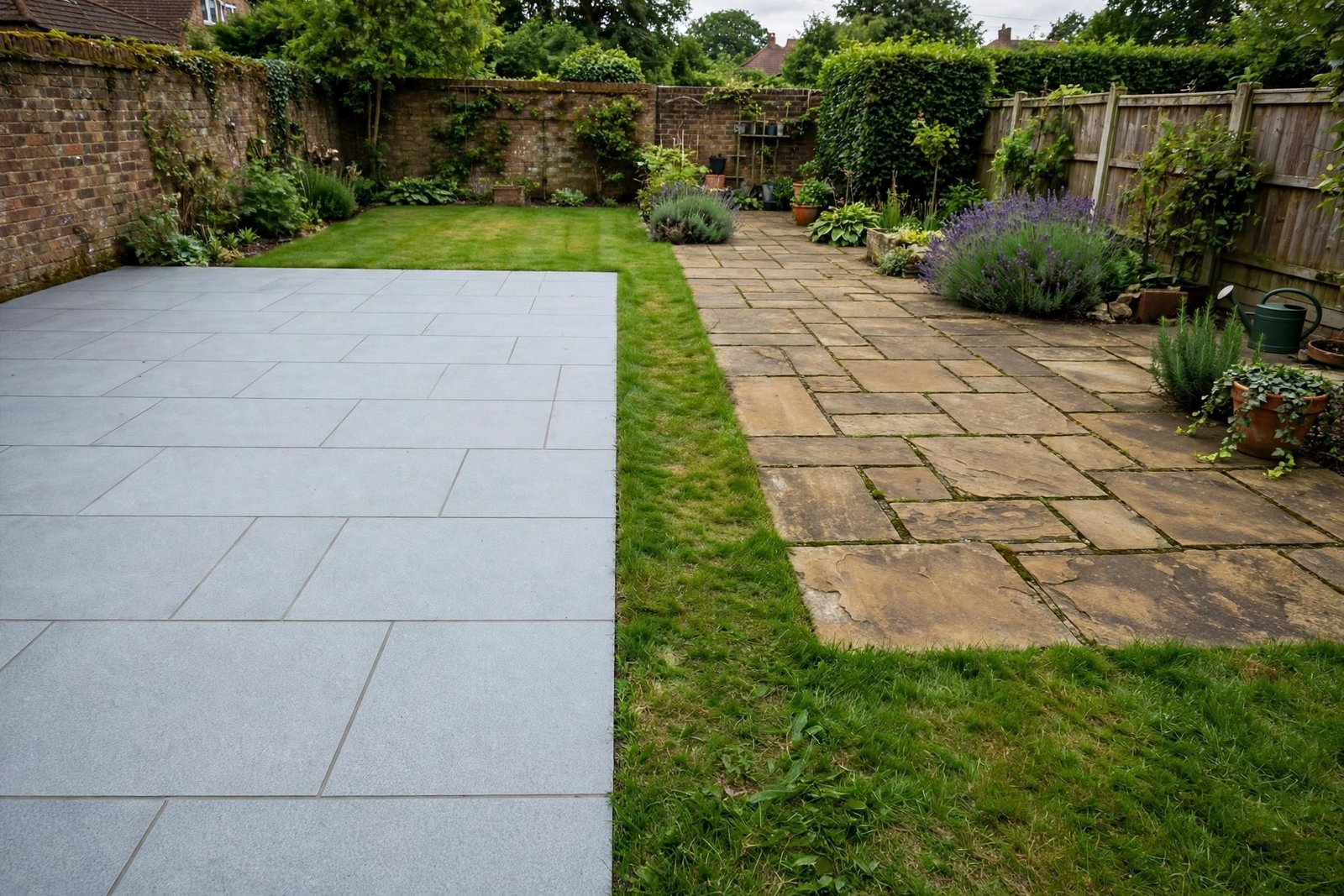
Porcelain paving works well at the front because it is hard-wearing, it stays looking smart with little upkeep, and it comes in a range of colours and finishes that can be matched to the house — a grey that suits a modern house, a warmer tone that suits brick. It is also worth thinking about in combination with the lawn: a pale paving against a green lawn, or a darker paving that frames it, can make a small garden look larger and more deliberate than a single surface on its own.
The choices that matter are the same ones we set out in our guide to how to choose a resin driveway colour and finish and in our comparison of porcelain paving vs natural stone: see a sample in daylight, think about how it will look next to the house and the lawn, and think about the edges and the borders, not just the slabs in the middle. A path with a neat border looks finished. A path with no edge looks like it stops halfway.
Paving also gives you a place for the practical things a front garden needs: a dry place for the bins, a step that does not get muddy, a surface for a pot or two by the door. It is the hard-working part of the garden, and it is worth choosing well.
Fencing: the frame that holds the garden together
Fencing is often the last thing people think about in a front garden, and it is often the thing that makes the biggest difference. A fence frames the garden in the same way a picture frame frames a picture: it defines the edge, it hides what is behind it, and it tells a visitor where the garden starts.
A low fence or a low wall at the front, with a gate that closes properly, makes a garden feel like a garden rather than a strip of grass next to a pavement. A taller fence at the side, where the front garden meets the neighbours, gives privacy without shutting the garden off from the street. And a fence that is level, solid and well finished makes the whole front of the house look cared for — which is the point we made in our guide to fencing in Wigan: a fence is only as good as its posts and its base, and a fence that leans or rots will drag the whole garden down with it.
The fence, the paving and the lawn need to be thought about together. A fence that is too high for a small front garden will make it feel like a yard. A fence that is too low will not define the garden at all. A gate that opens onto the paving, with a lawn beside it, is a garden that works. A gate that opens onto mud is a garden that does not.
Combinations that work
Here are a few combinations that work well in a typical Wigan front garden, depending on the house and how the garden is used. They are ideas, not prescriptions — the right combination depends on the garden, the house and the budget, and a proper survey is the way to find out.
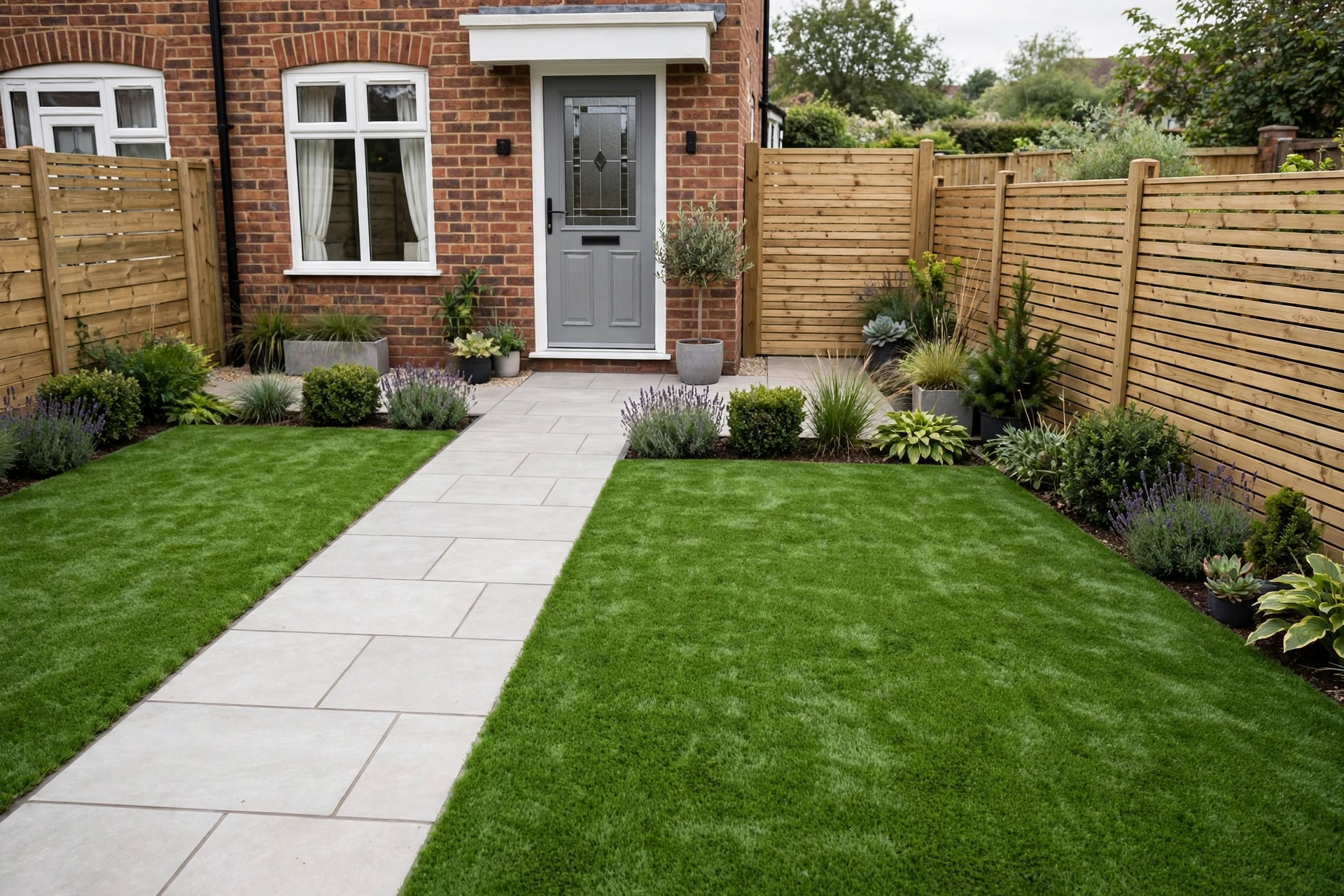
A small, tidy front garden. A strip of artificial grass beside a porcelain path to the front door, with a low fence and a gate. The grass stays green without mowing, the path stays clean, and the fence frames the whole thing. It is the lowest-maintenance combination, and it suits a house where nobody has time for a front garden that needs work every week.
A front garden that is also a parking space. Paving or a resin driveway for the car, with a strip of artificial grass and a border beside it, and a fence that defines the edge. The hard surface takes the car, the grass softens it, and the fence stops the garden looking like a car park. The drainage matters here more than anywhere — a surface that holds water will be a problem every winter, as we covered in our guide to resin driveway vs block paving vs tarmac.
A larger front garden with room to spare. A lawn in the middle, paving around the door and along the side, and fencing that gives privacy at the edges. This is the combination that benefits most from being planned as one job: the levels, the falls and the drainage need to work across the whole garden, not just in one corner of it.
A front garden that needs to look good from the street. A neat lawn, a clean path, and a fence that is level and well finished, with a couple of pots by the door. It does not need to be elaborate. It needs to be tidy, and it needs to stay tidy — which is why the low-maintenance surfaces matter more here than the planting.
What to get right before you start
A front garden is a small space, and in a small space the mistakes show. Three things are worth getting right before any work starts.
First, the levels and the drainage. A front garden that holds water will be muddy at the gate, and a front garden that falls towards the house will bring water with it. The base, the falls and the drainage need to be thought about across the whole garden — grass, paving and fencing together — not one surface at a time.
Second, the edges. Where the lawn meets the paving, where the paving meets the fence, where the fence meets the gate: these are the places a front garden either looks finished or looks unfinished. Neat, firm edges are the difference between a garden that looks designed and a garden that looks like three jobs done at different times.
Third, the access. A front garden is also a route — for the bins, for deliveries, for visitors, for a car. Make sure the path is wide enough, the gate opens properly, and there is somewhere dry for the bins that does not spoil the garden. A garden that works is a garden that gets used, and a garden that gets used is a garden that stays tidy.
The honest answer
A front garden does not need to be large, expensive or complicated to look good. It needs its parts to work together, and it needs to be easy to look after — because a front garden that is hard to look after will not be looked after, and a front garden that is not looked after is the first thing anyone sees of a house.
If you are thinking about it, the best next step is a visit. We visit, look at the garden properly, and give you a free fixed written quote after a site survey — and we will tell you honestly what the garden needs, including whether the grass, the paving and the fencing should be done together, and what combination would suit the house. Find us at everlastinglawns.co.uk.