How to keep a resin driveway looking new
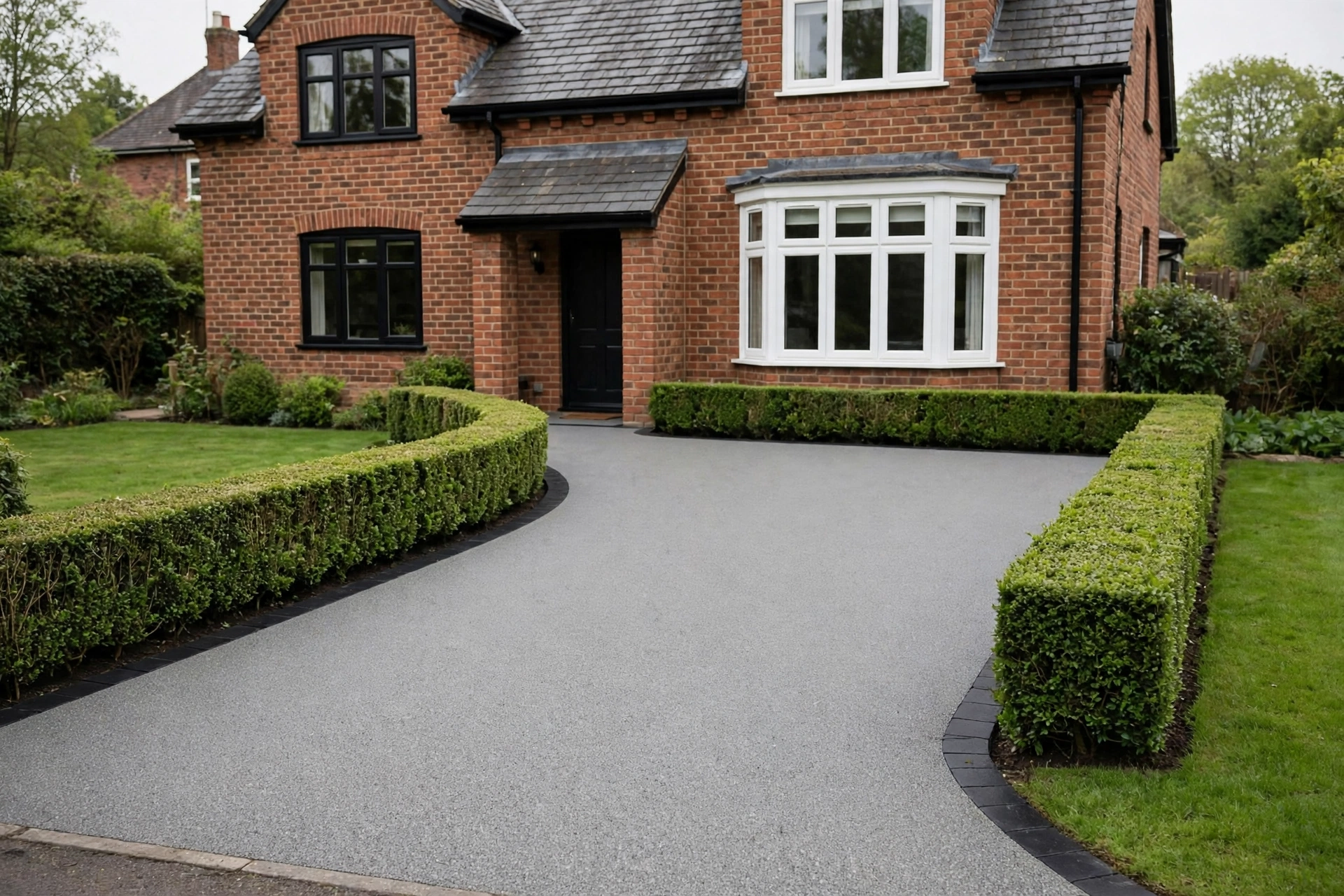
A resin driveway looks its best on the day it is finished — clean, even, and smart in front of the house. The question most owners ask next is a simple one: what do I need to do to keep it looking like that?
The honest answer is: not a great deal, but a little, regularly. A and it is meant to be used every day — cars driving over it, bins wheeled across it, rain falling on it. What makes the difference between a driveway that still looks smart years later and one that looks tired is not a big annual job. It is the small jobs, done often, and the few things avoided that would damage the surface.
Here is what to do, what to watch for, and when to ask for help rather than trying to fix something yourself.
Start with sweeping — the job that does most of the work
The single most useful thing you can do for a resin driveway is to sweep it regularly. Leaves, soil, grit and general dirt do not damage the surface on their own, but if they are left to sit they hold moisture, they stain, and they give weeds and moss somewhere to start.
A stiff brush and a regular sweep — once a week in autumn, when the leaves are falling, and less often in summer — will keep most of that away. Pay attention to the edges, where the driveway meets the lawn, the path or the fence, because dirt gathers there first. And sweep the leaves off before they rot down into the surface: a pile of wet leaves left for weeks will leave a mark that a quick sweep would have prevented.
It is a small job, and it is the one that matters most. A driveway that is swept regularly looks cared for, and it stays that way, because the dirt never gets the chance to build up.
Washing: water, a soft brush, and nothing harsh
When a sweep is not enough — after a muddy winter, or where a car has left marks — a wash with clean water and a soft brush will usually do it. Hose the surface down, brush it gently, and rinse it again. That is enough for most everyday dirt.
What matters is what not to use. Do not use harsh chemicals, solvents or strong cleaners on a resin surface, and do not use a pressure washer at close range or on a high setting — the force can loosen the stones from the resin. If a mark will not shift with water and a soft brush, or if you are unsure whether a cleaner is safe to use on resin, check the guidance from the installer first, or ask for advice, rather than trying something stronger and hoping for the best. A mark that needs a gentle clean is a small problem. A surface damaged by the wrong cleaner is a much bigger one.
The same applies to anything spilled on the driveway. Oil, paint and similar spills should be dealt with promptly — blot up what you can, wash the area with water, and if the mark remains, ask for advice rather than reaching for a strong solvent. The sooner a spill is dealt with, the less chance it has to set.
Leaves, weeds and moss: deal with them early
Leaves are the most common problem, and the simplest to deal with. In autumn, sweep them off regularly, and do not let them sit in a damp layer over the winter. Wet leaves hold moisture against the surface, and that is when staining and moss start.
Weeds are less common on a properly laid resin driveway than on block paving or tarmac, because there are no joints for them to grow through — which is one of the reasons we compared the surfaces in our guide to resin driveway vs block paving vs tarmac. But weeds can still appear at the edges, where the driveway meets the soil or the lawn, or in any small crack or gap. Pull them out while they are small, roots and all, rather than letting them establish themselves. A weed left to grow will do more damage than a weed pulled out early.
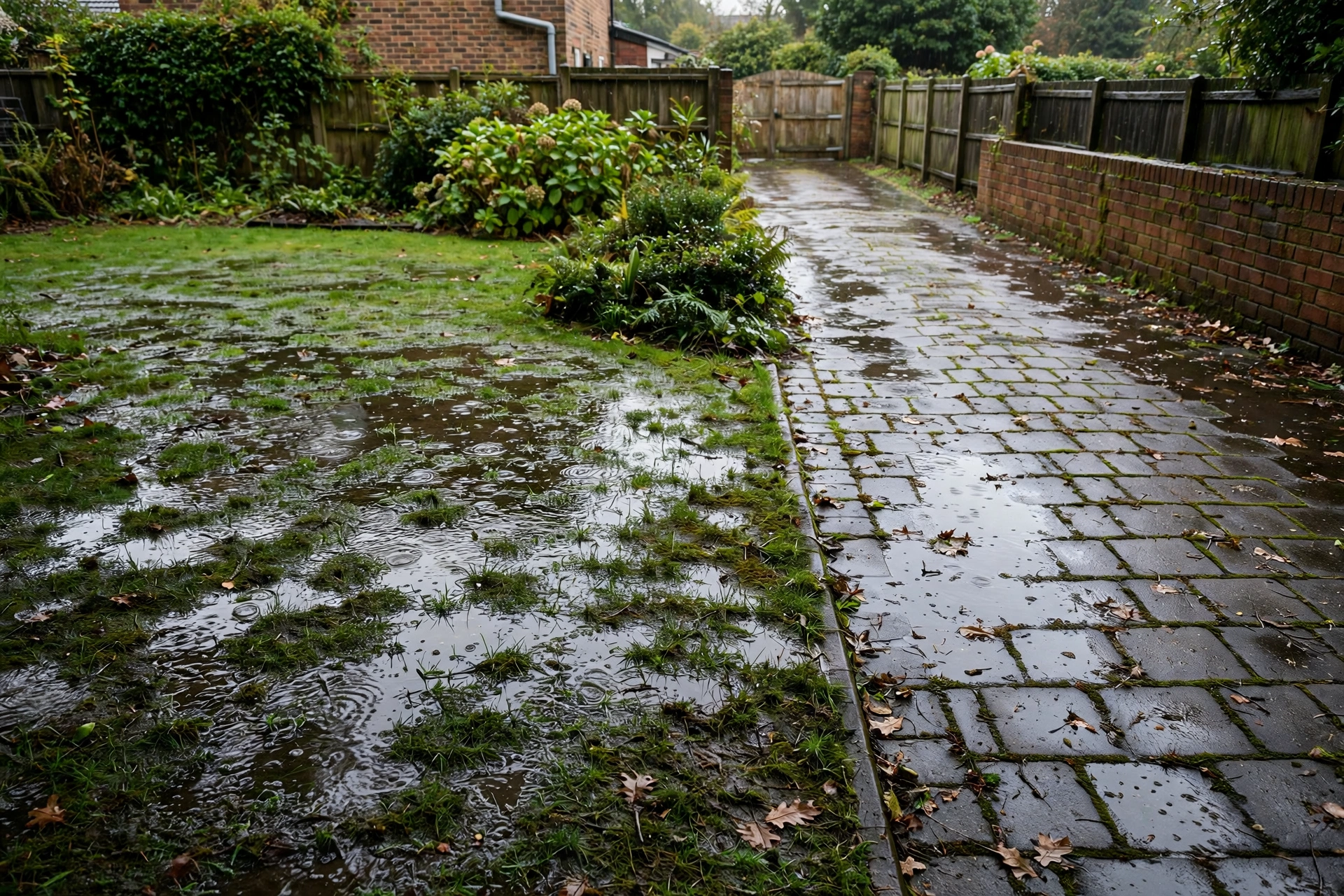
Moss and algae can appear in shaded, damp areas, especially in winter — the same damp conditions we covered in our guide to soggy garden. If you see a green or slippery patch, brush it off, wash the area with water, and let it dry. Do not ignore it: a slippery patch in winter is a safety problem as well as a looks problem. If it keeps coming back, or if you are unsure how to treat it safely on resin, ask for advice — the cause is usually shade and standing water, and that is worth looking at properly.
Tyres, turning and heavy loads: the wear to watch for
A resin driveway is made to be driven on, but a few habits will wear it faster than others. Turning the steering wheel while the car is stationary — dry steering — scuffs the surface in the same spot, time after time. It is a small habit, and it is worth breaking: move the car slowly while you turn, rather than turning the wheel while the car is still.
Heavy loads left in one place for a long time can also mark the surface — a skip, a trailer, or a car left standing for weeks without moving. If something heavy has to sit on the driveway, put a board underneath it to spread the load, and move it when you can. And if a car is leaking oil, deal with the leak and clean the spot promptly, rather than letting the oil sit on the surface.
None of this means treating the driveway gently. It is a driveway, and it is meant to be used. It means avoiding the few things that wear one spot faster than the rest, so the surface wears evenly and stays looking smart.
Small repairs: do not leave them, and do not guess at them
Sooner or later, most driveways get a small mark — a stone loosened at an edge, a small chip, or a spot where the surface has been scuffed. The important thing is not to leave it. A small loose patch left alone will get bigger, as water gets in and more stones come away. A small patch dealt with early is a small job.
What you should not do is try to repair it yourself with a product you have not been advised to use. Resin driveways are laid as a bound mix, and a repair needs the right material, matched to the colour and finish of the existing surface — which is why we covered choosing that colour and finish carefully in our guide to how to choose a resin driveway colour and finish. A repair made with the wrong material will stand out, and it may not bond properly.
So if you see a loose stone, a chip, or a patch that looks different from the rest of the driveway, take a photo, note where it is, and ask the installer for advice. A good installer will be able to tell you whether it is a small repair, or whether it is a sign of something underneath that needs looking at — the base, or the drainage. That is a conversation worth having early, while the repair is still small.
Through the year: a simple routine
Keeping a resin driveway looking new does not need a complicated routine. It needs a simple one, followed through the year.
In autumn, sweep the leaves off regularly, and do not let them rot down on the surface. In winter, keep an eye out for moss and slippery patches in shaded areas, and brush them off. In spring, give the driveway a wash with water and a soft brush, and check the edges for weeds or loose stones. In summer, sweep off the dust and grit, and deal with any spills promptly.
And once a year, step back and look at the driveway as a whole. Is it draining properly, or is water standing anywhere? Are the edges still firm? Is there a spot that is wearing faster than the rest? If anything has changed, it is worth asking about it — the same way you would ask about any other part of the house. A driveway that is looked after in small ways, regularly, will look smart for far longer than one that is left alone until something goes wrong.
The honest answer
A resin driveway does not need a lot of care. It needs regular sweeping, a wash with water when it needs one, leaves and weeds dealt with early, and the few habits avoided that wear one spot faster than the rest. It needs no harsh chemicals, no pressure washer at close range, and no guesswork with repairs — if something is loose, chipped or stained and will not shift with water and a soft brush, ask for advice.
That is the whole secret: a little, often, and nothing harsh. A driveway cared for that way will still look like the driveway that was laid — clean, even, and smart in front of the house.
If you are thinking about a resin driveway, or if yours needs a look at, the best next step is a visit. We visit, look at the driveway and the garden properly, and give you a free fixed written quote after a site survey — and we will tell you honestly what it needs, including whether a repair, a clean or a new surface is the right answer. Find us at everlastinglawns.co.uk.